12/26/2025 Lunar X, L, and V

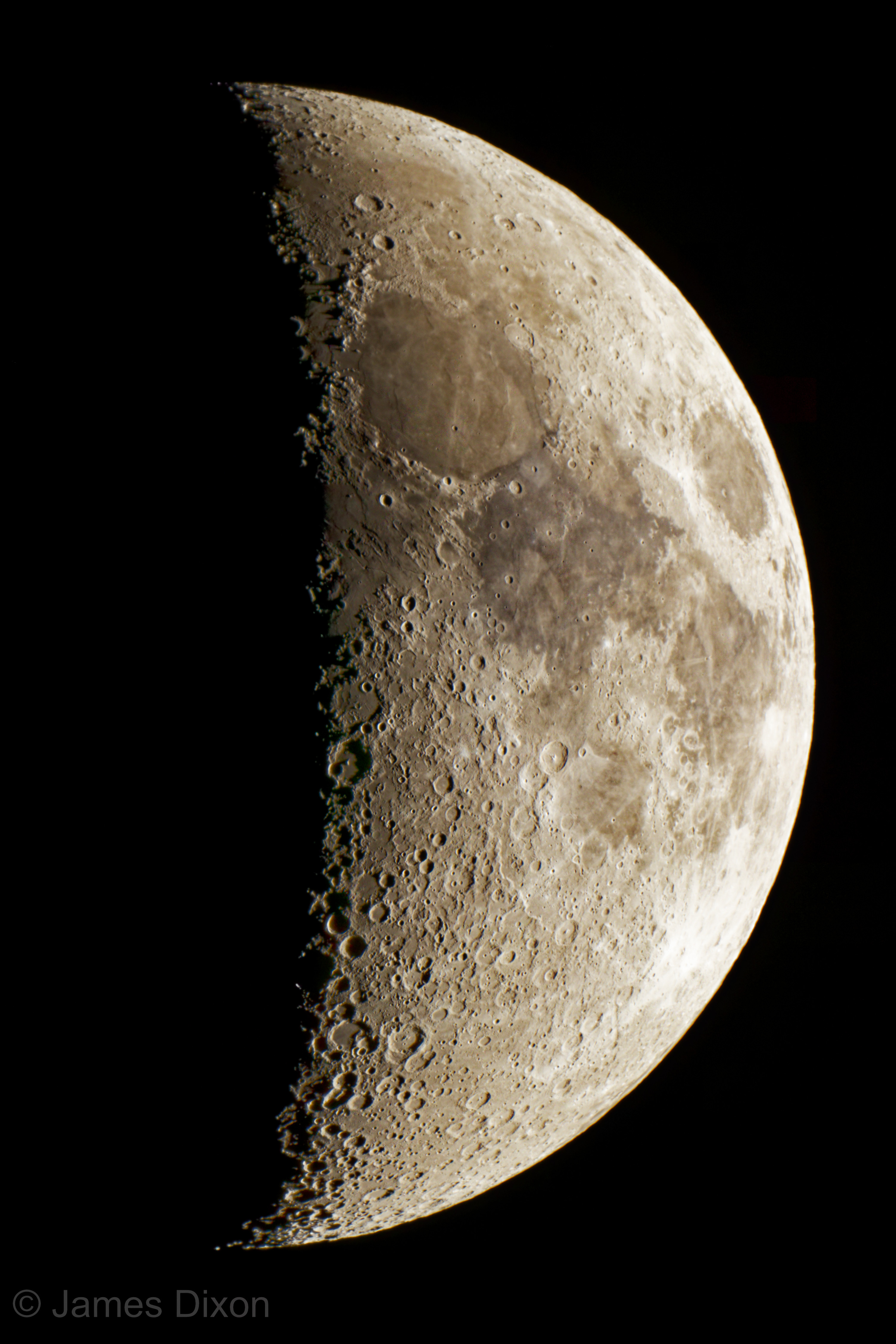
Thanks go out to my friend Deepak Kumar for mentioning this event to me. The Lunar L, X and Lunar V features on the Moon are simply impact crater rims, with maybe some mountain ridges thrown in, that happen to look familiar to people who use the Roman alphabet. Once every lunar cycle, they are all brightly lit and visible, if you look. Look along the terminator, which is the line between line and shadow, local dawn on the Moon. Just above the bottom is the Lunar L. About a quarter way up from the bottom, the Lunar X stands out. Now look a little more than halfway up, the Lunar V is also there though perhaps not as prominent. This was taken around 8PM Friday night, with my 127mm Maksutov telescope and my Canon T8i camera. Ten frames stacked and sharpened with Autostakkert (a free little program designed just for this kind of thing). You might also think you see a Lunar O, but there are a lot of those here. 🙂
9/28/2025 The Squid and Flying Bat Nebulae

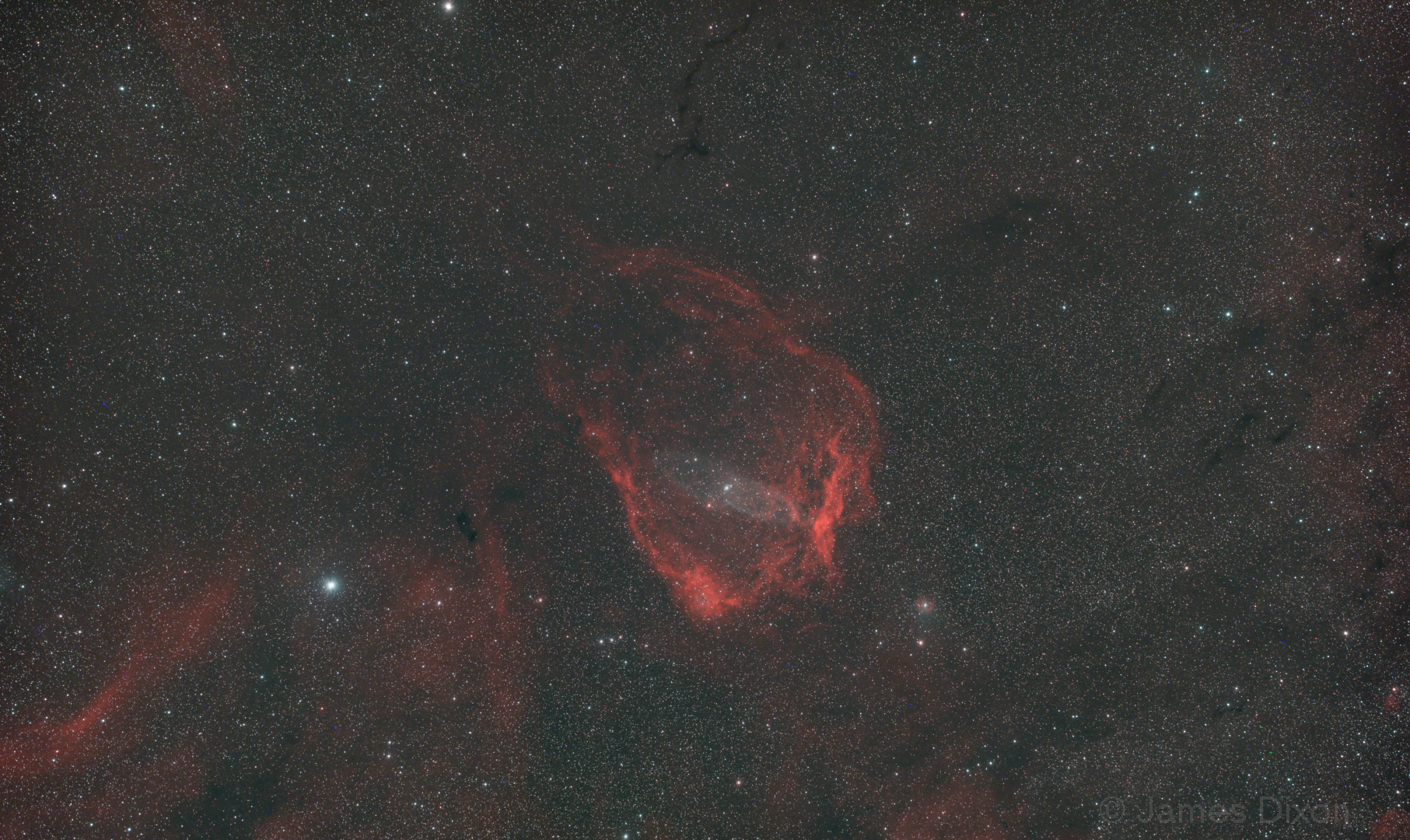
Three months and a week ago, I started this astrophotography project, my longest to date. The big red bell shape in the middle is SH2-129, the Flying Bat Nebula. Just 11 years ago, in 2011, a patient and dedicated amateur astronomer named Nicolas Outters discovered something odd, a green semi-oval shaped nebula inside or in front of it. The squid is dim. After four hours of integration, I thought I could see it there. After eight, I was sure. But people said it needed at least 20 hours. This weekend, I was able to add another 16 hours on it with my Samyang 135mm and ASI2600MC Pro camera and an L-Extreme F2 dual narrowband filter. This is a total of 296 five minute integrations. or 24.66 hours. Click it for a closeup.

The red Flying Bat is glowing in Hydrogen Alpha light while the Squid is glowing in Oxygen III light, between them those are the two most prominent types of emission nebula. Here is someone else’s close up of the squid so that you can see how it got that name. https://commons.wikimedia.org/wiki/File:Flying_Bat_and_Squid_nebulae_narrowfield.jpg

I may try this again next year with my 11″ SCT, it has a focal length times the Samyang 135.

9/1/2025 Pickering’s Triangle

Here is Pickering’s Triangle, the middle part of the Veil Nebula aka the Cygnus Loop. Regardless of what you call it, this is part of a supernova remnant in the constellation of Cygnus. The entire loop is about 3 degrees or six moon widths across. This was shot on August 22nd with my 11″ SCT at f/1.9 with an Antlia Triband RGB Ultra file and ASI2600MC Pro camera.

LinkedIn
LinkedIn
Share