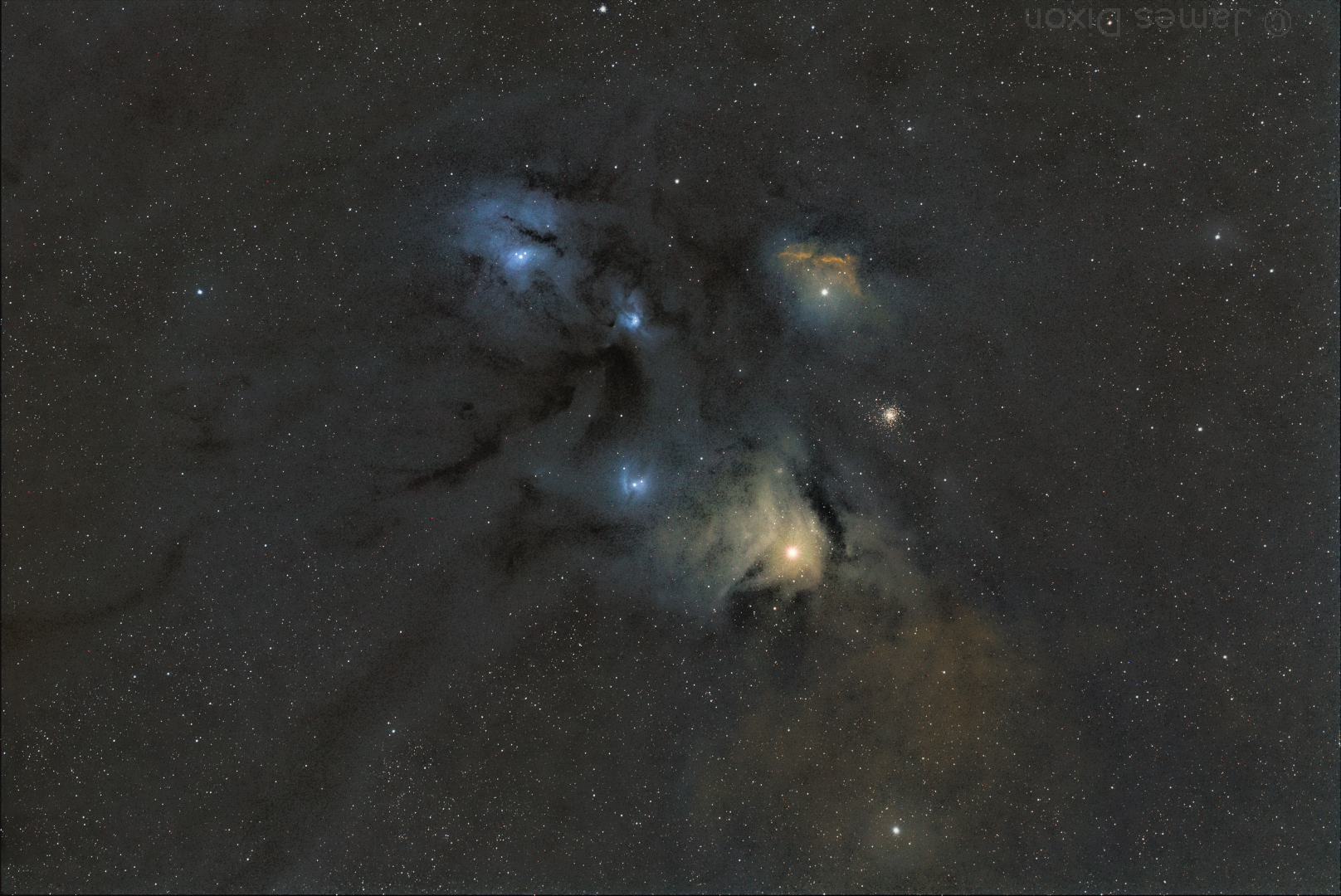
7/20/2025 the Rho Ophiuchus Cloud Complex

Near the bright red star Antares is a large complex of interstellar clouds. Some are emission, some are reflection, and some are dark clouds. This is probably the best image I’ve ever gotten of it although I have seen many that were far better.

In the pentagram near the center are Antares at the bottom of the pentagram and the globular cluster M4 above and to the right of it. The other three points of the pentagram haven’t earned a name yet. They probably have, I just don’t know what they are. The star just above and to the left of the pentagram is Rho Ophiuchus itself. Just barely in the constellation of Ophiuchus while the pentagram is in Scorpius.

This was shot with my Samyang 135mm F/2 lens and ASI2600MC Pro with an Antlia Triband RGB Ultra filter for a total of two hours from the River Ridge Observatory.
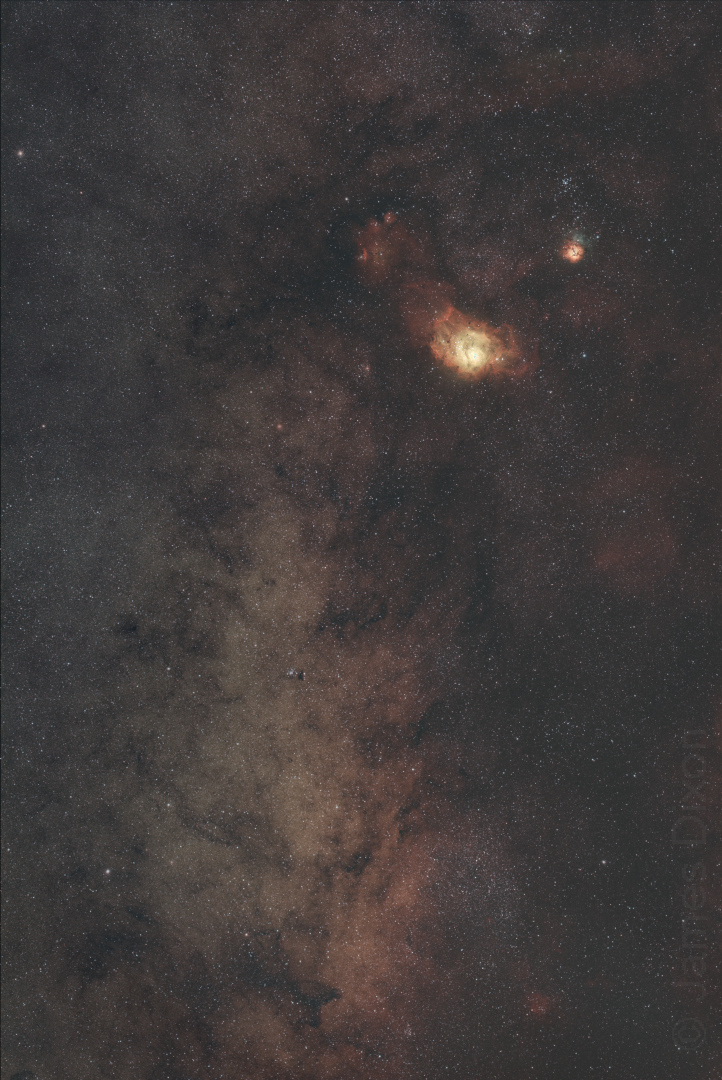
7/20/2025 the Lagoon Nebula and neighboring regions

In the upper right are the Lagoon Nebula and Trifid Nebula while the rest of the image is dominated by the Milky Way, mostly in the constellation of Sagittarius.

The Lagoon is a bright star forming nebula, visible to the unaided eye, and second only to the Orion Nebula in the winter sky. Above and to the right is the Trifid Nebula, which deserves it’s own closeup. The Trifid contains emission, reflection, and dark nebulae all in one tidy package. Throughout the image but especially in the Milky Way, you can see dark nebulae everywhere. These are simply cold clouds of gas and dusk that are too cold to emit light and not near anything to let them reflect light.

This was shot with my Samyang 135mm F/2 lens and ASI2600MC Pro with an Antlia Triband RGB Ultra filter for a total of two hours from the River Ridge Observatory.

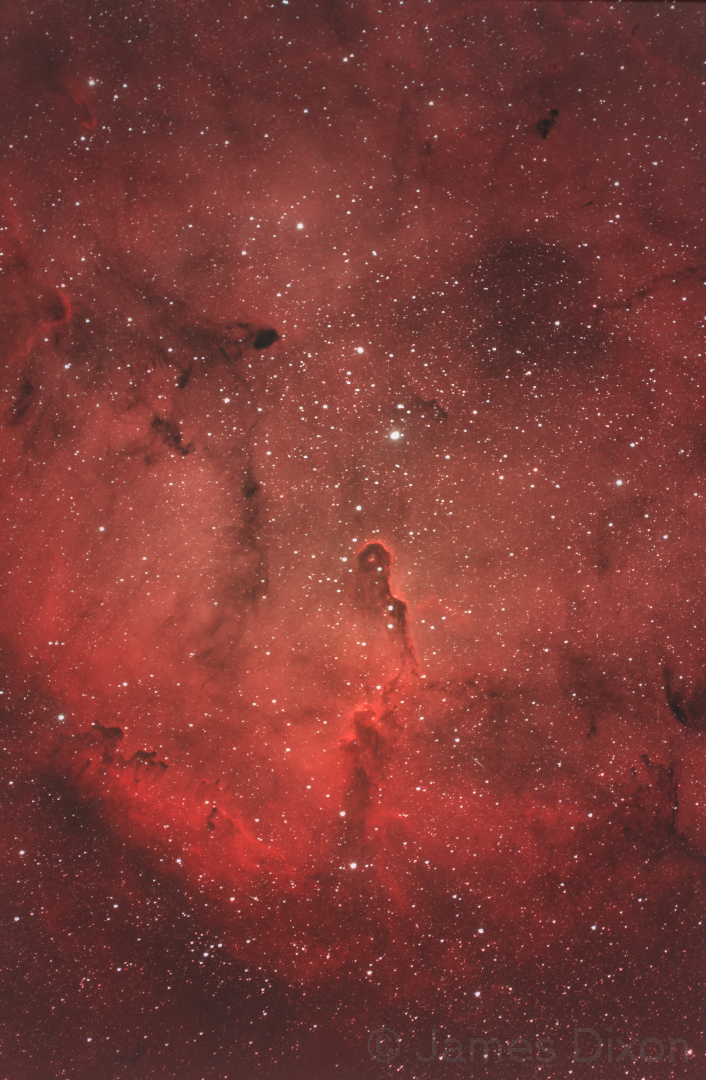
7/20/25 IC 1396 the Elephant Trunk Nebula

The Elephant Trunk Nebula is a bright emission nebula in the constellation of Cepheus. This is a bit of a closeup but the entire nebula is roughly spherical and is energized by the bright star a little above the “trunk” in this picture.

This was shot with my 11″ SCT at f/1.9 with an L-Extreme F2 filter and an ASI2600MC Pro for a total of 137 minutes from the River Ridge Observatory.

LinkedIn
LinkedIn
Share