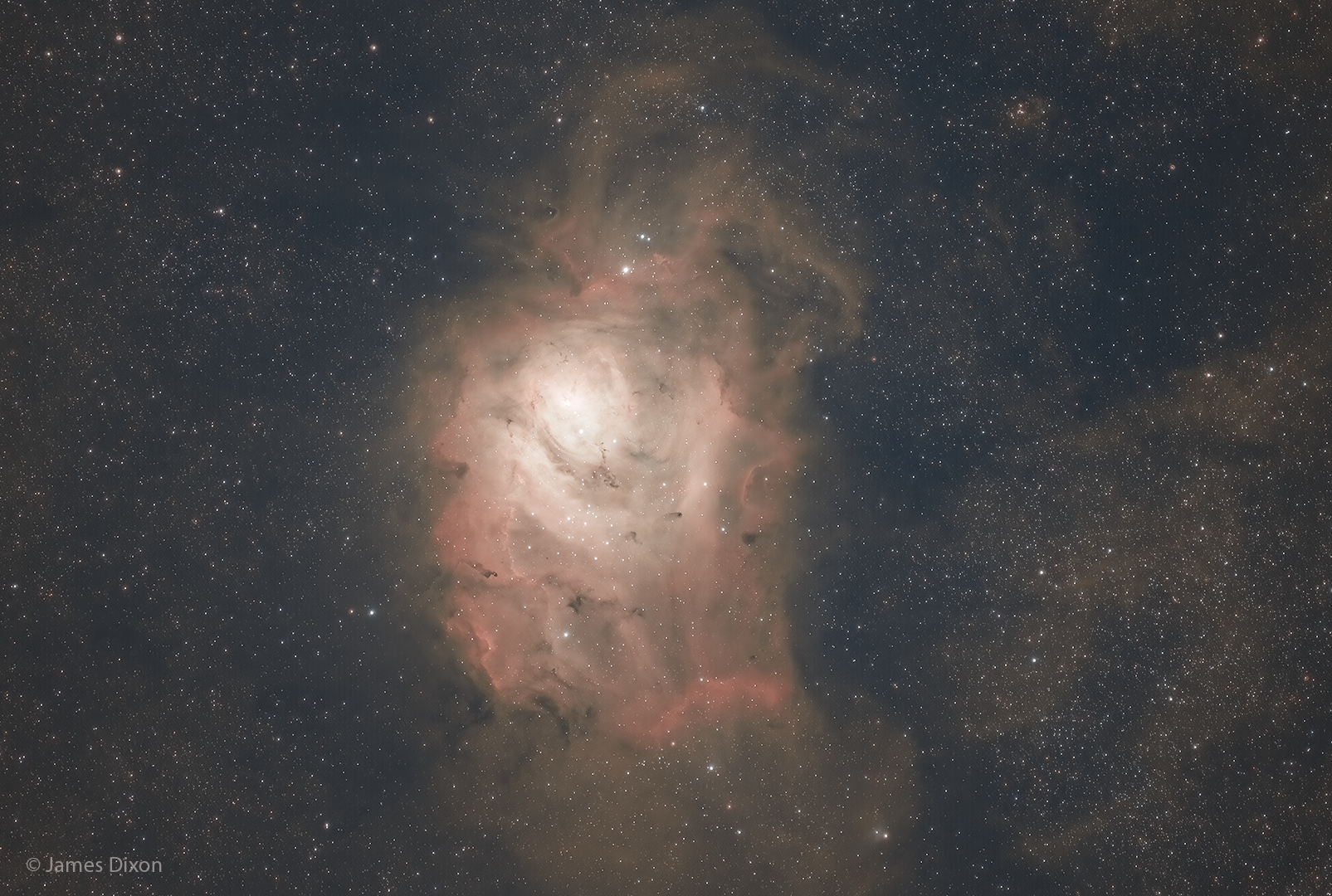
Here is the Lagoon Nebula, aka Messier 8 and other aliases, a star factory in the constellation of Sagittarius. I shot this object last year but hopefully my skills are better this year. This is 75 minutes total integration, 3 minutes at a time. I used my 11″ SCT at f/1.9 and my dual narrowband L’eNhance filter. Taken Friday night at the River Ridge Observatory.
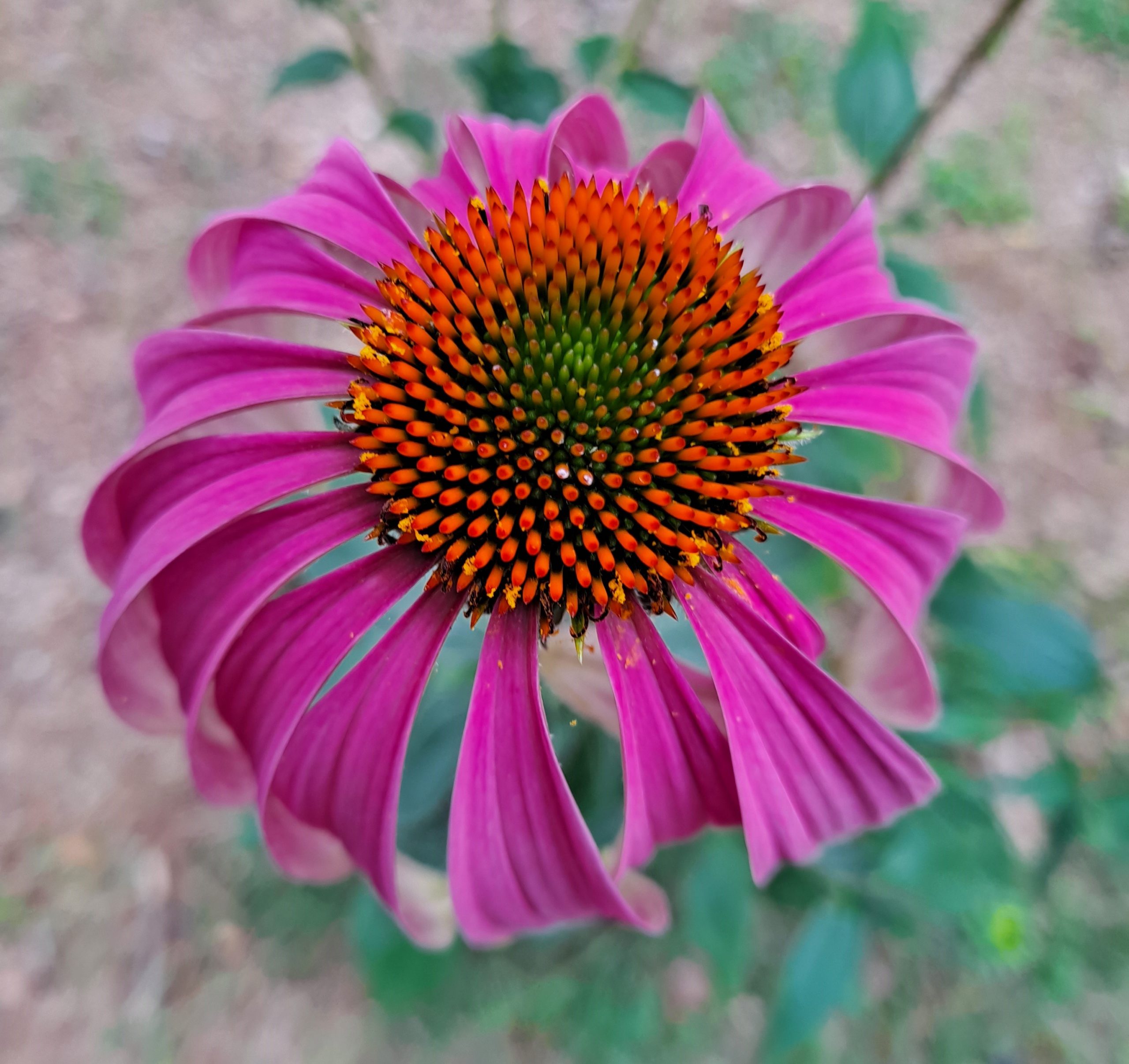
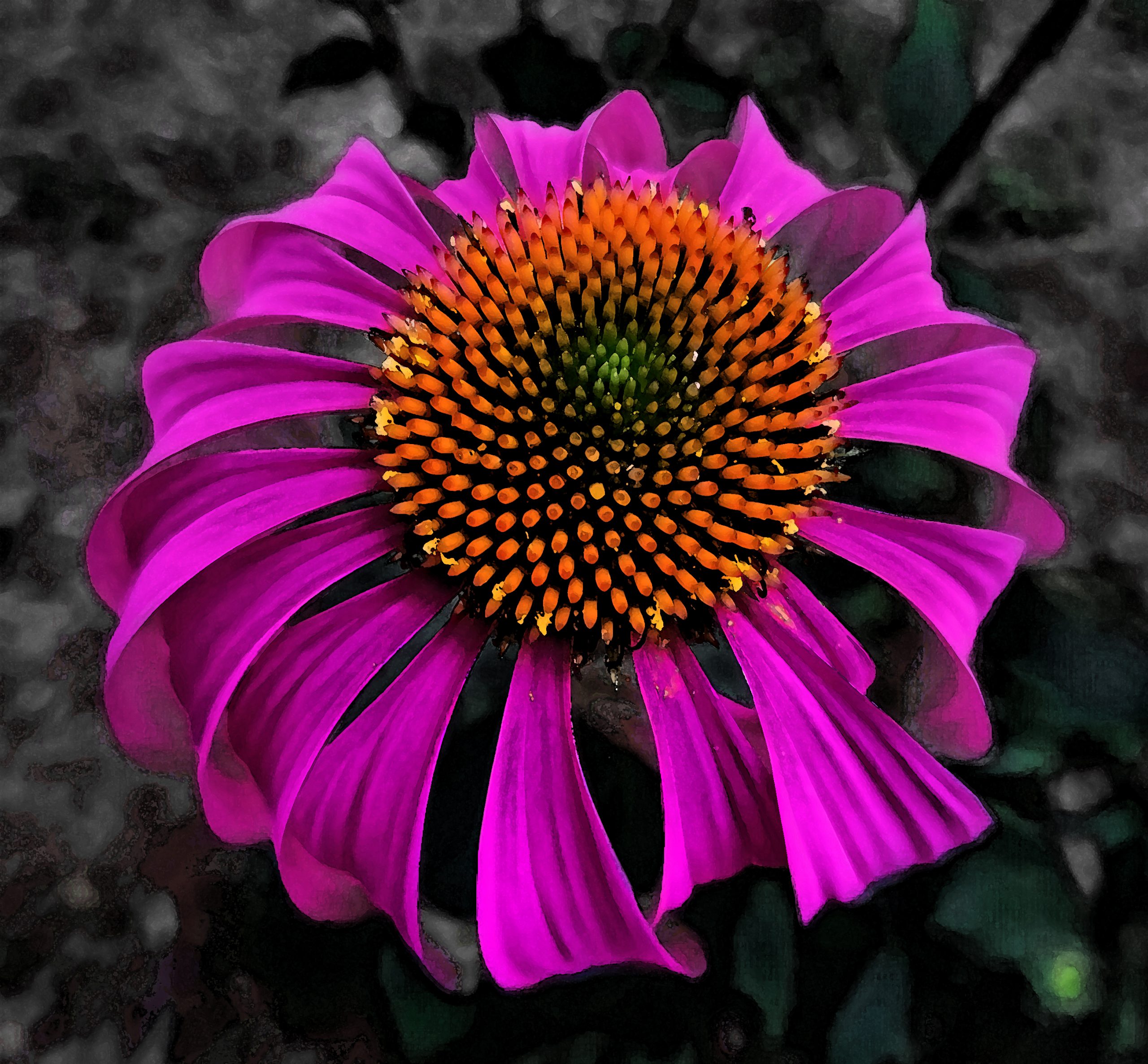
What do you do on a rainy Sunday afternoon when you finished the chores that you agreed to do? Try to improve your Photoshop skills of course. I’m no blackbelt when it comes to Photoshop. I do some curves and levels and vibrance and sharpening and call it good. Today in the overcast low light afternoon I noticed that the coneflower was looking pretty so I took a shot of it with my phone to see what I could do with it. The first image is the original after cropping. In the second image, I enhanced the petals and the cones, separately, then desaturated the background. Then I looked in the default PS filters and clicked one after the other until I found “watercolor” and I really liked that one.
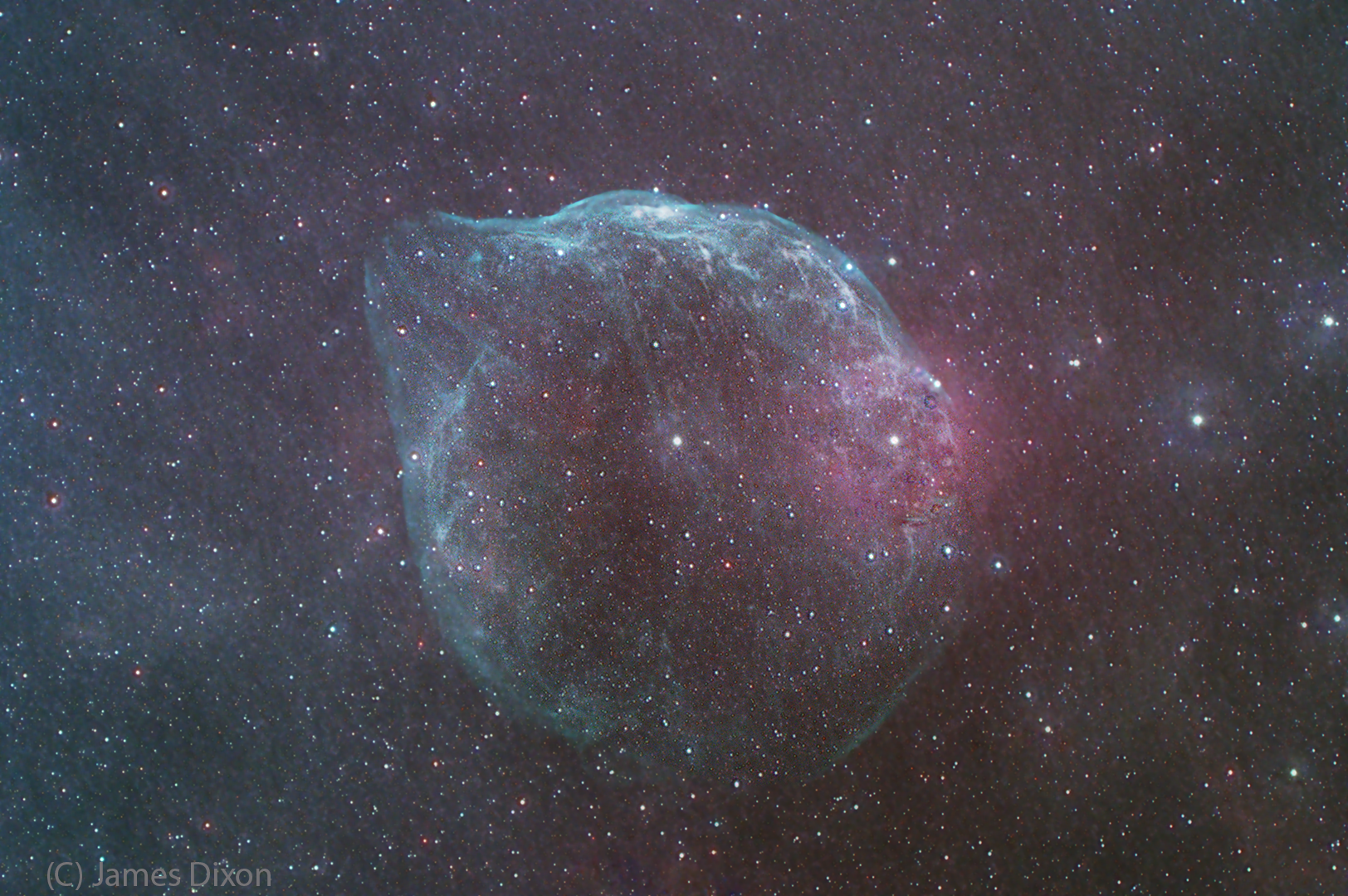
The Dolphin-head Nebula, aka Sharpless 2-308 aka the Cosmic Bubble, may be the most difficult object I’ve ever imaged. I shot four hours of five minute integrations in early March with my C11 and Hyperstar with a dual narrowband filter to accentuate the Hydrogen Alpha and Oxygen III. I could see the bubble in each individual frame but when I tried to process it the nebula would disappear. I eventually decided to wait until next winter and get more data. I could see that what I had was good but maybe just not enough. Anyway, two and half months later I decided to take another crack at it. Starting from scratch with my 48 raw images, it worked. I was soon far beyond what I had achieved before. All this was in Photoshop. Once I had a reasonable image, I use a tool called Starnet++ which separates stars from extended objects like nebula. I then had one image of stars and one of nebula. I worked on the nebula, bringing out details, and then added it back to the stars image. About the object, SH2-308 is a bubble blown by very hot Wolf-Rayet star in the constellation of Canis Major. The star is the one seen in the center of the bubble. Wolf-Rayet stars are very massive very hot stars that are thought to be pre-supernova. This one is about 5,000 light-years away and the bubble’s apparent size is slightly larger than the Moon. The “dolphin” is looking up to your left. Thanks go to my friend John Reed for some ideas he gave me.