8/14/2020 The Veil Nebula in Narrowband

As mentioned in an earlier post, I set up my 11″ Elf with the Hyperstar so I could shoot at f/1.9 and added an Optolong L-eNhance filter to the setup. This filter blocks most light but lets the reddish Hydrogen-alpha line, the blueish Hydrogen-beta line, and the greenish Oxygen III through so that your color camera can still do RGB photography. I used my ZWO ASI294MC Pro.

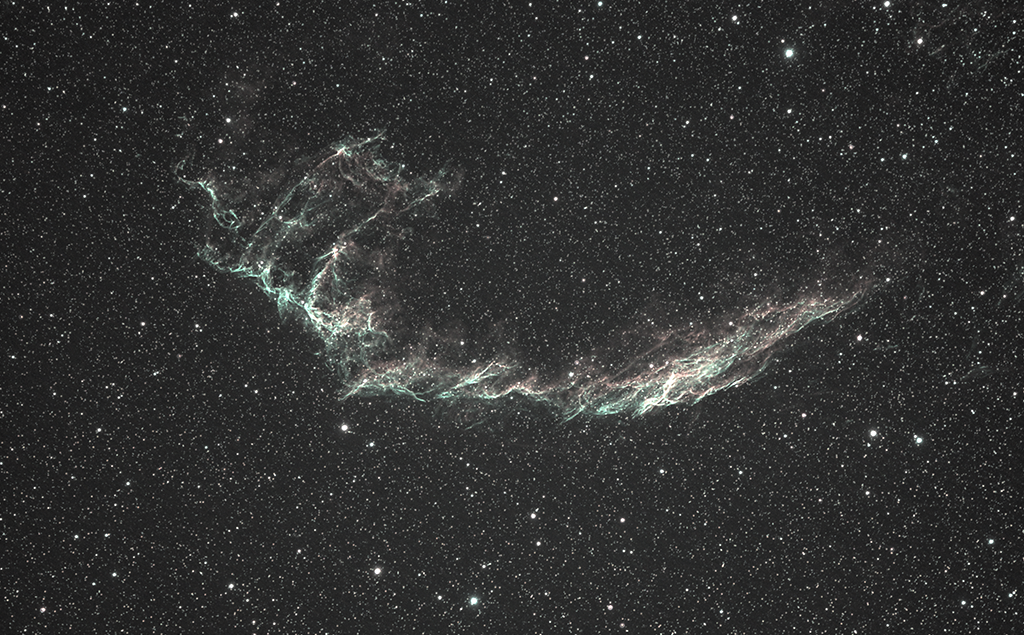
I’ve never shot the Veil Nebula before. It is a large (6 times the diameter of the Moon) but faint supernova remnant in the constellation of Cygnus the Swan. Recent measurements have it about 2400 light years away and the progenitor star exploded 10,000 to 20,000 years ago.

Click the images for full size.
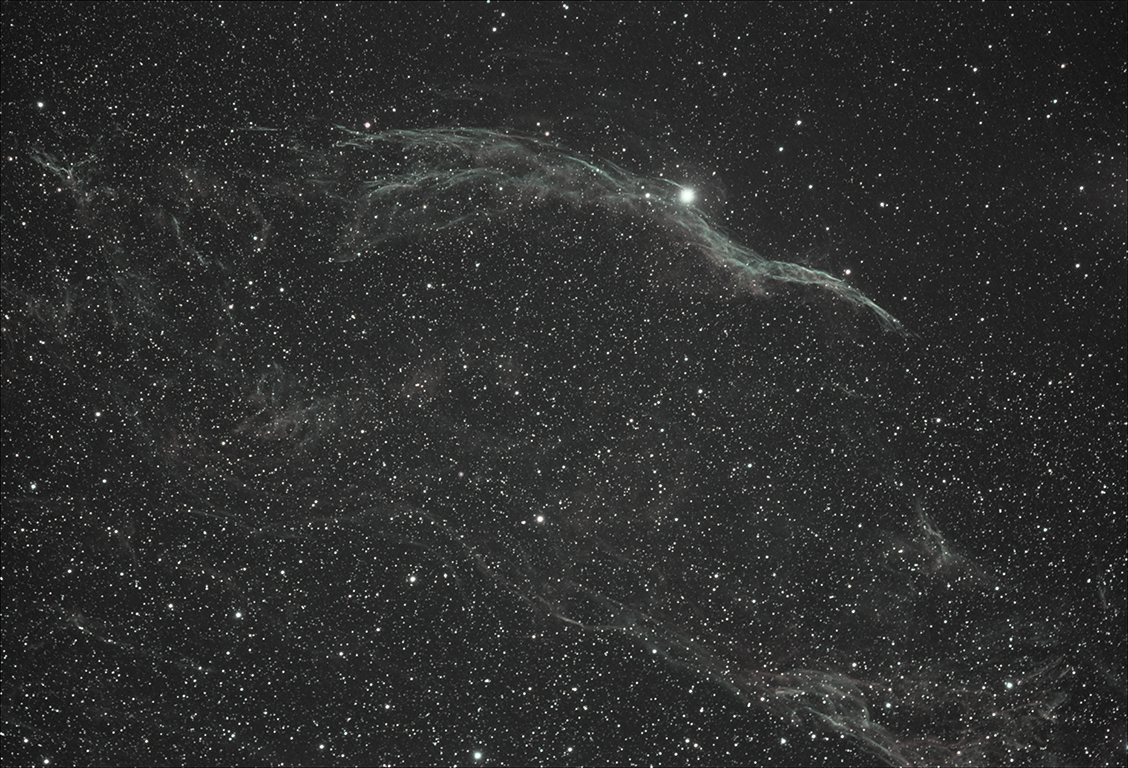
NGC 6960 – The Western Veil Nebula
NGC 6992 – The Eastern Veil Nebula

8/14/2020 The Lagoon and Trifid Nebulae in Narrowband

Friday evening was a good evening at the River Ridge Observatory. Other than continuous lightning in the east that turned into nothing but lasted until about 2 AM, the conditions were pretty good. I stayed and imaged until 4:30 Saturday morning. This will be the first of a few posts about my results.

I set up my 11″ Elf with the Hyperstar so I could shoot at f/1.9 and added an Optolong L-eNhance filter to the setup. This filter blocks most light but lets the reddish Hydrogen-alpha line, the blueish Hydrogen-beta line, and the greenish Oxygen III through so that your color camera can still do RGB photography. I used my ZWO ASI294MC Pro.

Click the images to see the full image.

https://jamesdixon.us/wp-content/uploads/2020/08/M8-2020-08-14-C11-Hyperstar-LeNhance.png
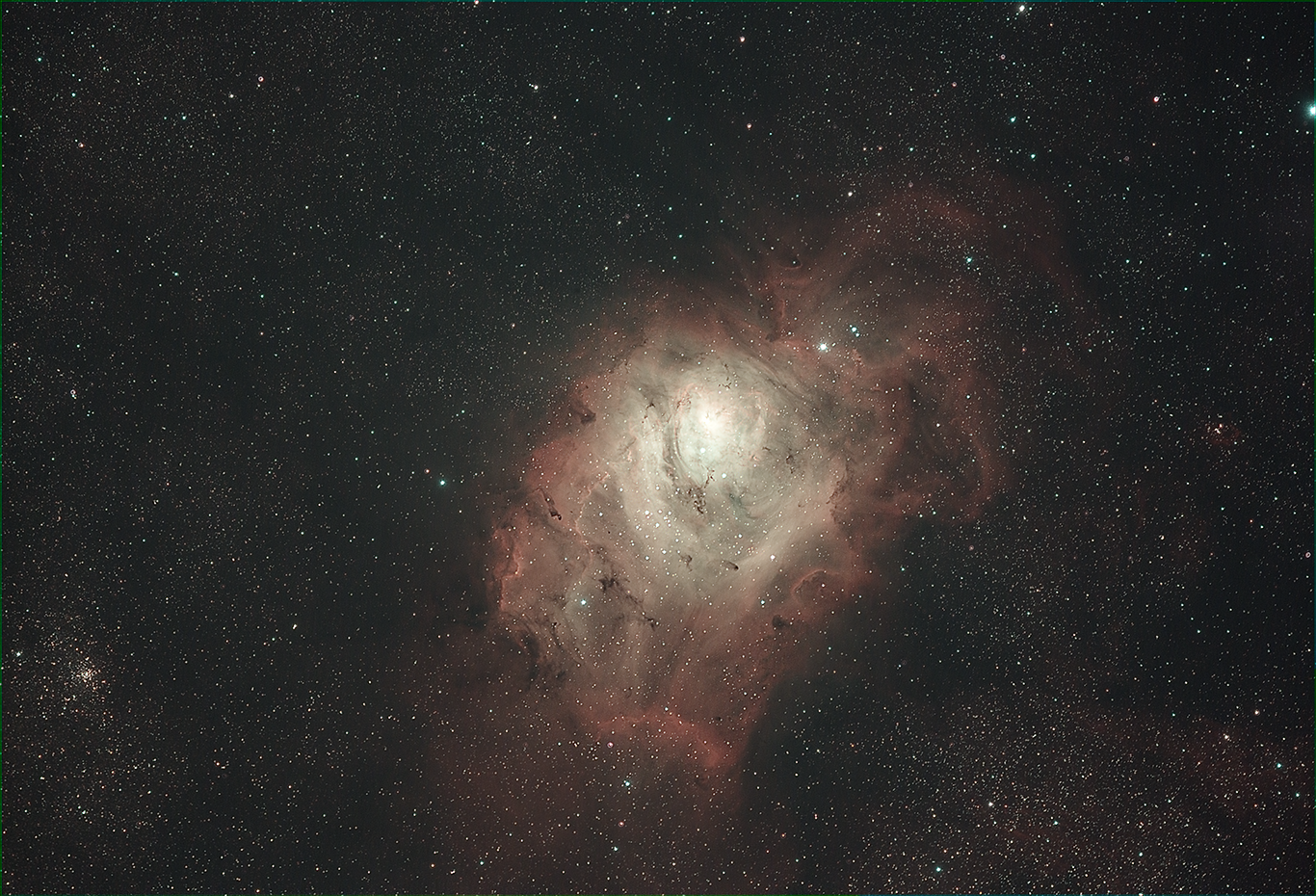
M8 – The Lagoon Nebula and NGC 6544 The Starfish Cluster to the lower left.
https://jamesdixon.us/wp-content/uploads/2020/08/M20-2020-08-14-C11-Hyperstar-LeNhance.png
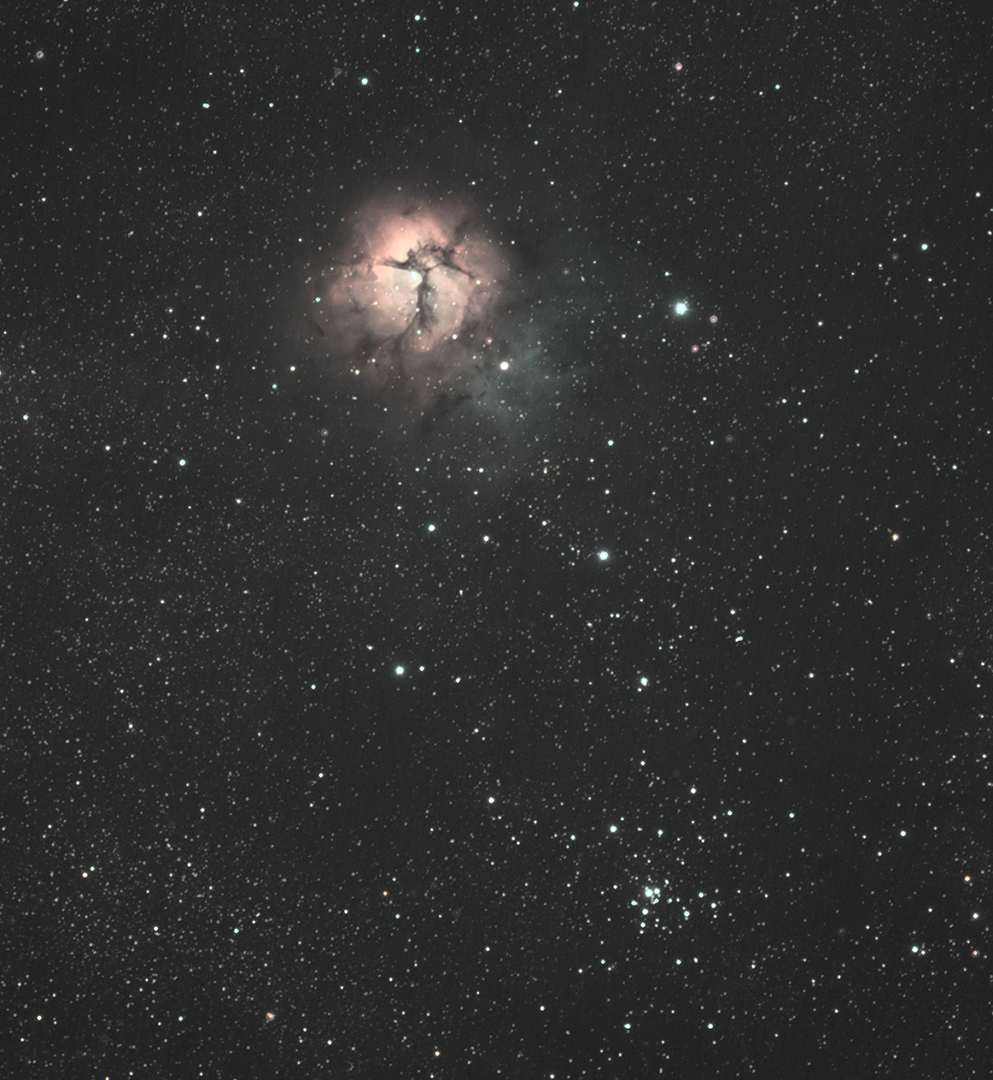
M20 – The Trifid Nebula

8/8/2020 The Pipe Nebula

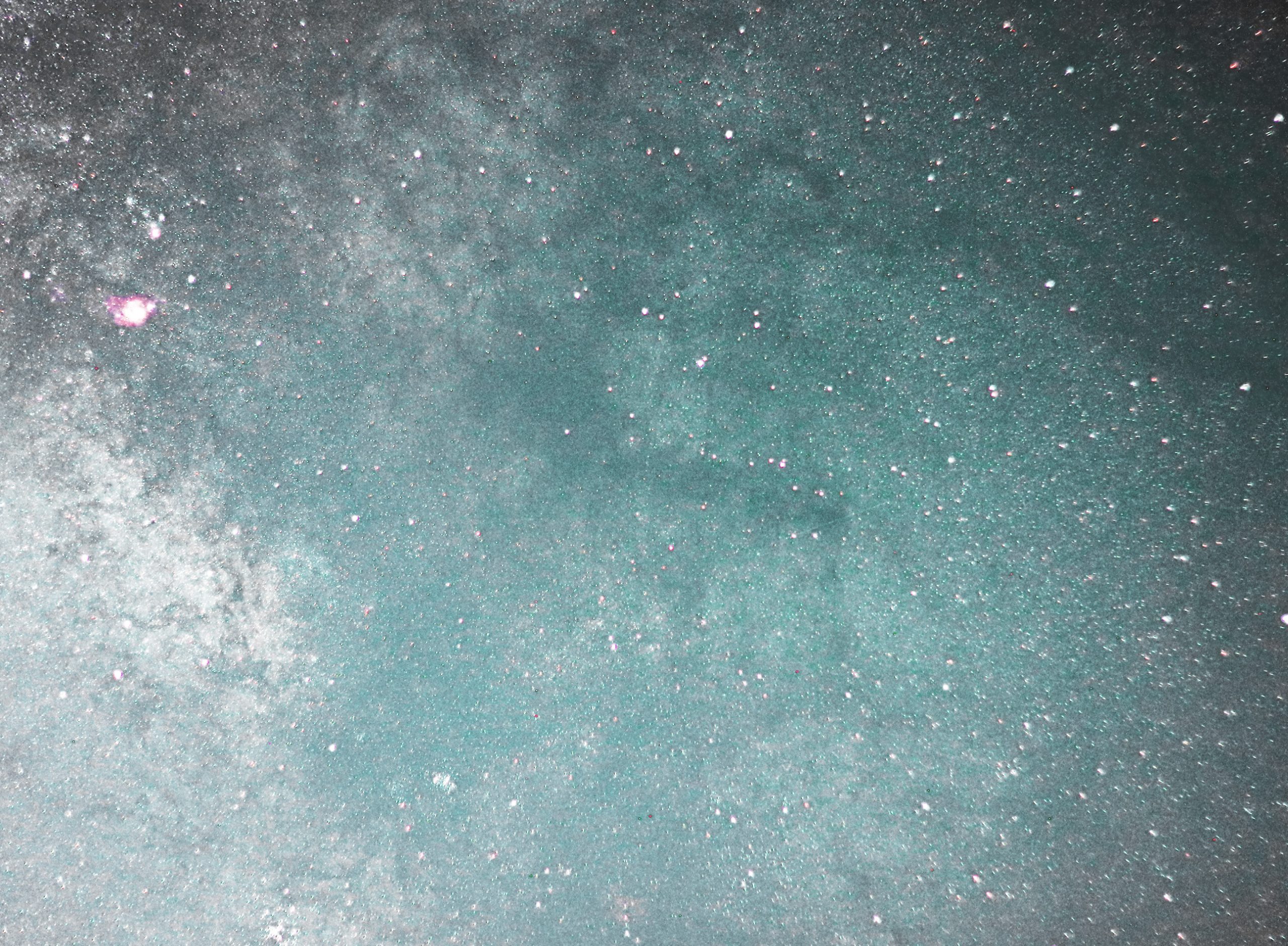
Here we have several objects in the southern Milky Way, nestled between Sagittarius and Scorpius, as seen from the River Ridge Observatory Saturday night. In the center is the Pipe Nebula (or Barnard 67 after the astronomer who pioneered the study of these dark nebulae). It’s a tobacco pipe, or maybe something besides tobacco, and you can see the bowl and stem of it. You can see the dark nebulae tracing their way all over this. These are cold gas and dust that aren’t glowing but instead blocking the light from the stars behind them.Glowing red in the upper left is the Lagoon Nebula, one of the best star forming regions in our neck of the woods.This was made from 40 60 second images with a Canon 800D and 50mm lens at f/2. Cropped a little and processed in Photoshop.

LinkedIn
LinkedIn
Share